









Christmas gift box ideas built around one person, not one store aisle
11/01/2026 · 7 min read · Eternal Gift
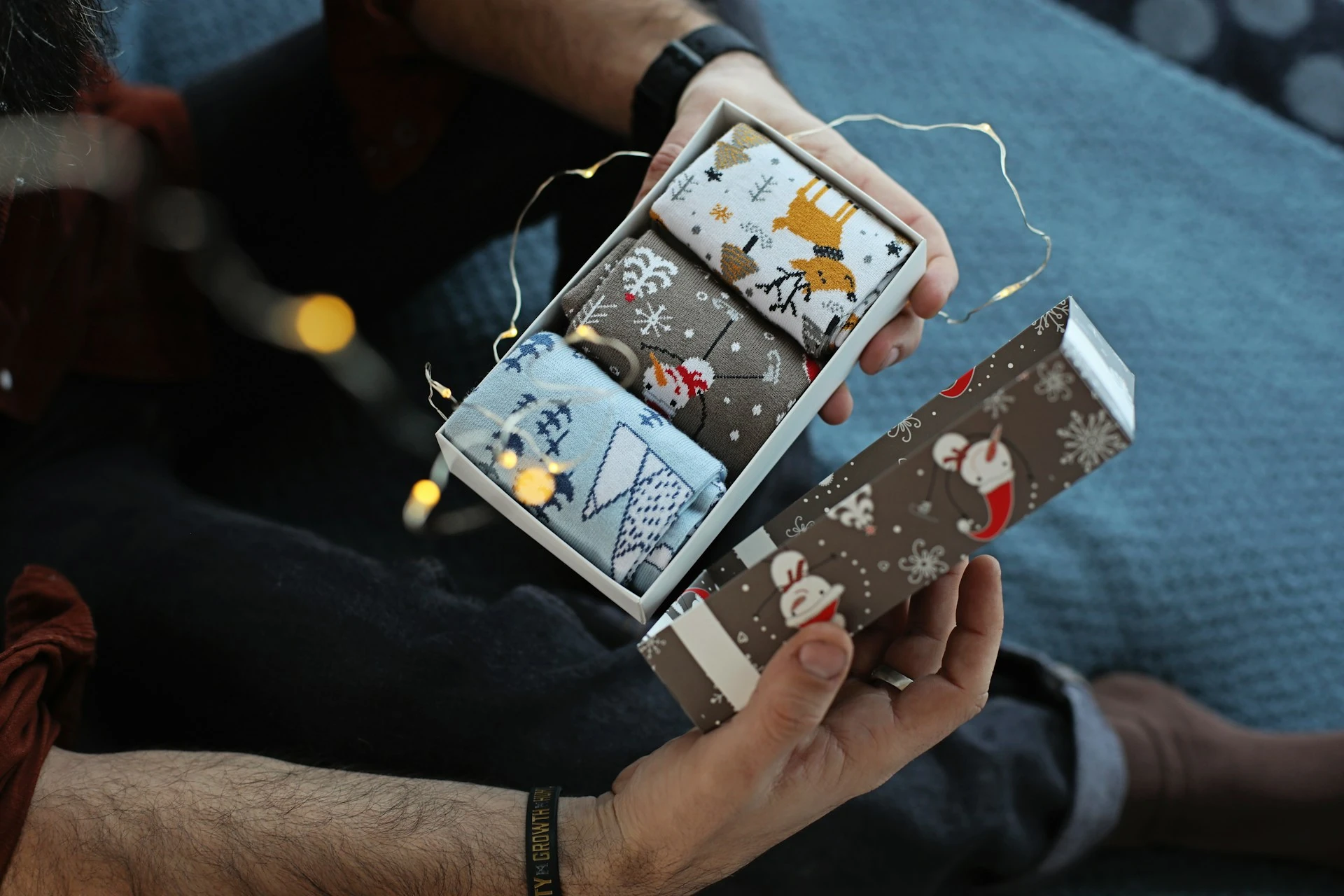
It's the second Saturday of December and you're standing in the seasonal aisle holding a kraft box, a candle, hot cocoa mix, fuzzy socks and a mug that says Merry & Bright. Each one is fine. Together, they look like a gift basket from a hotel lobby.
A Christmas gift box works when it has one theme chosen for one person, and four to six things that belong together: a main piece, two or three supporting items, something they'll eat or use up, and a note. Pick the theme before you shop. It decides what goes in, and more importantly, what stays on the shelf.
Start with a scene, not a category
She likes coffee is a category. She drinks her first cup standing at the kitchen window before anyone else is up is a scene, and a scene builds a box on its own: a bag of beans from a roaster she hasn't tried, a mug that keeps it hot, a good dish towel, and a note meant to be read at that window.
Then run one test on everything you've picked. Take an item out. Does the box feel thinner without it? If not, it was never part of the theme.
| Part | What it does | In the coffee-at-the-window box |
|---|---|---|
| Main piece | The thing they'll use most | A good insulated mug |
| Supporting items | Two or three things that complete it | Whole beans and a pour-over cone |
| Something consumable | Gets used right away | Shortbread cookies |
| The note | Says why this box is theirs | A card written by hand |
Christmas gift box ideas by theme
Eight themes that tend to land. Swap the items for what fits the person; keep the logic.
- The slow Saturday box (for a partner). Pancake mix from a local mill, real maple syrup, a crossword book, two mugs and a note with a Saturday in January already circled. It's a plan, not just stuff.
- The snow day box (for a friend who runs cold). Wool socks, a tin of good tea, a paperback by an author they love, and a cheap deck of cards for when the power goes out.
- The rest box (for a parent who wants nothing). House slippers that actually fit, the soap they always buy for themselves, and an old family photo printed and framed. There's more on decoding I don't need anything in Christmas gifts for parents who want nothing.
- The hometown box (for someone who moved away). Snacks from a grocery store they miss, a postcard of their old street, a local hot sauce, and a note listing three places you'll go when they're back.
- The desk box (for a coworker). A good notebook, a pen that writes smoothly, coffee or tea, and a short note. Nothing that touches body, age or diet. More guardrails in gifts for a coworker.
- The first apartment box. A real chef's knife, a cutting board, salt flakes, one recipe card in your handwriting.
- The movie night box (for a family). Popcorn kernels, a seasoning shaker, boxed candy, and a handwritten ticket for a movie the whole house has to watch together.
- The art studio box (for a kid). Big paper, chunky crayons, stickers and washi tape, each wrapped separately. For kids, unwrapping is half the gift. Check the age label on every item.
If your office is doing a themed exchange this year, a small box is an easy theme to set. Here's how to organize a Secret Santa around it.
If you can take an item out and the box doesn't feel thinner, it didn't belong there.
How to pack a gift box so it opens like a story
- The note goes on top. It's the first thing they see when the lid comes off, and it names the theme in a sentence or two. If you freeze at a blank card, what to write in a Christmas card has a simple formula.
- Supporting items in the middle, each in tissue paper or a scrap of fabric.
- The main piece at the bottom. By the time they reach it, they've figured out the theme, and the gift lands all at once.
Crinkle-cut paper fill keeps things from sliding and hides a plain cardboard bottom. Line a basic box with the same paper you used outside. If the box will travel in a cold car or a mailbox, leave out anything that freezes badly, like some liquids, and pack glass upright with tape around the lid.
And if you run out of tissue paper, improvise. That's how Hallmark tells the start of the modern gift wrap business. At Christmas 1917, the company's store in Kansas City sold out of tissue paper. Rollie Hall, the founder's older brother, dug up some brightly colored French envelope liners, the store sold them as gift wrap for ten cents apiece, and they sold out too. Shortly after, the brothers began making their own wrapping paper.
The original Christmas boxes
In Britain and several Commonwealth countries, December 26 is Boxing Day, and the name points back to actual boxes. Tradespeople used to collect Christmas boxes of money or presents on the first weekday after Christmas, and employers gave each servant a box to take home with gifts, a bonus and sometimes leftover food. The habit is old: in his diary entry for December 19, 1663, Samuel Pepys notes that he paid his shoemaker and gave something to the boys' box against Christmas.
The idea underneath is a thank-you to people who kept the household running all year. A small version still works for the building super, the dog walker or the mail carrier on your route, as long as it's simple.
The layer nobody expects
Building a box isn't the same as making a gift by hand. If you want to make what goes inside, from jam to a paper photo book, start with these homemade Christmas gift ideas.
One thing fits every theme and takes up no room: your photos together. Eternal Gift does that part. You build a page online with photos, a message or letter, a song and stickers, then download the QR code and print it to tuck in at the bottom, with the main piece. They scan it with their phone and it opens, no sign-up needed.