








The 36 questions to fall in love were never about love. Here's what they measured
11/13/2026 · 9 min read · Eternal Gift
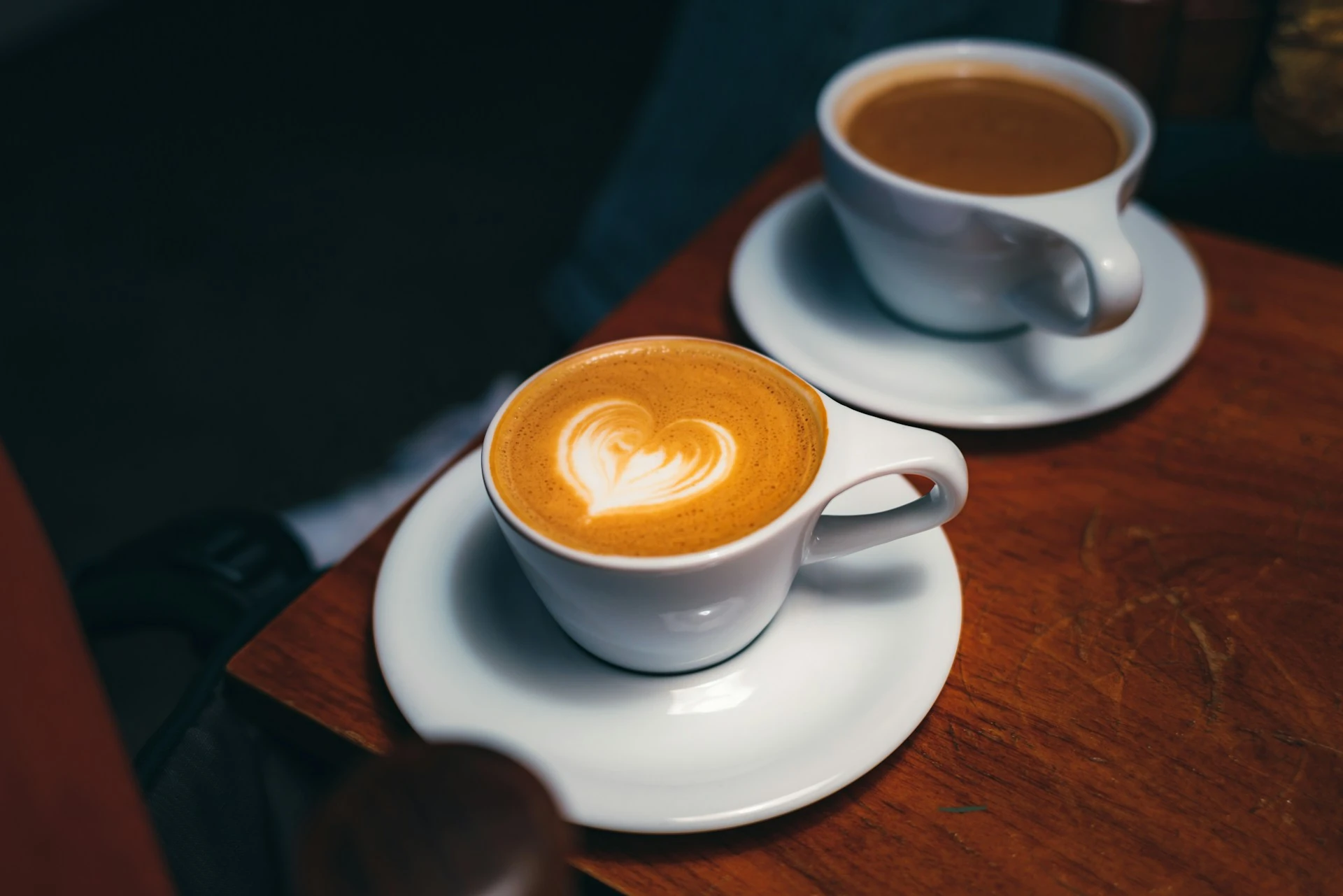
Thursday night, a taco place with paper menus, third date. You have covered jobs, siblings, and the apartment you both agree is overpriced. Then he pulls up a list on his phone and says, half joking, that these are the questions that make strangers fall in love. Want to try?
You laugh. By question seven, neither of you is laughing.
The list is real, and so is the research behind it. What changed is the story people tell about it. The original study was not trying to make anyone fall in love, and two of the most repeated anecdotes about it do not hold up against the sources. Here is what was measured, and how to use the questions so dinner feels like a conversation instead of an interview.
The short version
What the internet says. Thirty-six questions plus four minutes of eye contact will make two strangers fall in love. A couple from the study even got married six months later.
What the sources say. The questions were built to create closeness in a lab, and love was never measured. The eye contact comes from a 2015 essay. The wedding came from an earlier experiment with a different list.
Where the 36 questions to fall in love came from
In 1997, psychologist Arthur Aron of Stony Brook University published a paper in Personality and Social Psychology Bulletin with his wife, psychologist Elaine Aron, and three colleagues. The title says what they were after: generating interpersonal closeness in an experiment.
The problem was a lab problem: to study close relationships, researchers needed a way to make strangers feel close on demand. On a 2023 episode of Scientific American's podcast, Aron put it simply: the goal was to be able to randomly assign people to be close or not.
According to the paper's abstract, the procedure takes 45 minutes. Pairs of people who have never met work through self-disclosure and relationship-building tasks that slowly escalate. In practice, that means 36 questions in three sets of 12. You take turns asking and answering, and every time a third of your time runs out you move to the next set, finished or not.
What the study measured, and what it didn't
The key word is closeness. In the first of three studies, pairs who used the 36 questions ended up feeling closer than pairs who spent the same time on small talk, the kind of questions you ask in an elevator. In the description published by the Greater Good Science Center at UC Berkeley, the closeness participants reported afterward matched the average level other participants reported for the closest relationships in their lives. After 45 minutes.
In the other two studies, per the abstract, there was no significant effect from pairing people who agreed on important issues, from telling them their partner would probably like them, or from explicitly asking them to try to get close. The structure of the questions did the work.
And love? It was not part of the research question. Closeness, Aron told Scientific American, is not the same thing as being in love. Elaine Aron was blunter in a statement quoted by UC Berkeley's news office in 2015: they had not created the questions to help anyone fall in love. To test that, she said, you would need people who came in actively wanting to fall in love, and you would need to follow them long enough to see whether the relationships lasted.
The follow-up that does exist is modest. Gery Karantzas, a relationship scientist at Deakin University in Australia, summarized it in The Conversation: seven weeks later, in the final study, 57% of pairs had talked again, 35% had done something together, and 37% had sat together in class. That is a friendship starting, not a wedding.
How a lab tool became a love recipe
Most people met the questions through one essay. In January 2015, writer Mandy Len Catron, who teaches writing at the University of British Columbia, published To Fall in Love With Anyone, Do This in the New York Times Modern Love column. She had gone through the questions with an acquaintance at a bar in Vancouver and ended the night with four minutes of staring into each other's eyes. They fell in love. By 2017, according to Vancouver's Georgia Straight, the essay had passed eight million readers, and Catron said the two of them were still together.
The headline did the rest.
The wedding story has its own trail. The 1997 list descends from an earlier one in Edward Melinat's 1991 dissertation; Melinat is one of the 1997 coauthors. That older version was bolder and included role-playing asking your partner out. It was in that 1991 experiment, Scientific American reports, that two participants ended up married.
Inside the three sets
Set one: warming up
Questions you might answer for a friendly acquaintance. Who you would want at your dinner table if you could pick anyone alive. Whether you would like to be famous, and for what. What your perfect day looks like. Midway through comes a task: tell your life story in four minutes.
Set two: what matters
One step deeper. Your greatest accomplishment. Your most treasured memory, and your worst one. What you would change about how you live if you knew you had one year left. Then an exercise that catches people off guard: taking turns naming five good things you see in the other person.
Set three: the two of you
Now the questions turn to the pair. Making three true statements that start with we. Sharing an embarrassing moment. When you last cried in front of someone. Which single thing you would grab from a burning house once everyone was safe. The last one asks you to share a personal problem and hear how the other person would handle it.
The full list is on the Greater Good in Action site.
How to use the 36 questions on a date
- Take turns. One person asks, both answer, and you alternate who goes first. Greater Good cites a 2013 study by Susan Sprecher and colleagues in which pairs who took turns liked each other more and enjoyed the conversation more than pairs where one person did all the talking at a time.
- Follow the clock, not the list. Split your time into thirds and switch sets when each third is up. What matters is spending similar time at each level. Reaching question 36 is not the goal.
- Skipping is allowed. Some questions touch on death, your mother, your worst memory. In the lab nobody had to reveal more than they were comfortable with, as UC Berkeley's article notes. Karantzas adds that disclosing too much too soon can backfire and leave the person who shared feeling exposed, especially people who tend to be anxious in relationships.
- Listen more than you ask. For Aron, the biggest factor is feeling that the other person is responsive to you: paying attention, reacting, remembering later. The question is just the excuse.
- Don't make it a weekly ritual. Repeat them too often, Aron warns, and the answers turn rote and the effect fades.
- It works over video. A 2023 study in the journal Social Development ran a version of the procedure over video calls with unacquainted kids aged 9 to 13. Those pairs ended up feeling closer than the comparison group, and the authors cite similar effects in online studies with adults. For a long-distance relationship, that is a plan for your next call.
The 36 questions don't manufacture love. They give two people an organized excuse to say things they would never say on an ordinary Tuesday.
If you have been together for years
Aron told Scientific American that in an ongoing relationship, doing the questions with your partner is of some help. The big effect, he said, comes from doing them with another couple you don't know, the version UC Berkeley's article describes. Aron's explanation is that doing something new and challenging reminds you how exciting it can be with your partner.
There is a quieter use, too. Anyone who goes through the 36 questions walks away with material that exists nowhere else: the perfect day, the most treasured memory, the thing they would save from the fire. Almost nobody writes it down. A month later the feeling stays and the details are gone.
Write them down. Then give them back. Pick three answers you heard and turn them into a love letter that opens with you told me your perfect day starts with… If one answer has already turned into a nickname, it belongs with your inside jokes. If you would rather save it for later, the same answers work as a letter to open in the future. And if the conversation showed that one of you feels loved through words and the other through gestures, the piece on love languages covers what the research found.
If you want to keep that letter in digital form, Eternal Gift lets you build a page with photos, the text, a song from YouTube and stickers, which the other person opens from a link or a QR code with no sign-up. The photo from that third date can sit right next to the answer about the most treasured memory.
Questions about the 36 questions
Sources
- Aron, Melinat, Aron, Vallone and Bator, Personality and Social Psychology Bulletin, 1997: abstract (copy at stafforini.com)
- Greater Good in Action, UC Berkeley: 36 Questions for Increasing Closeness (procedure, instructions and evidence)
- Scientific American, Science Quickly, 2023: Love and the Brain, Part 1, with Arthur Aron
- UC Berkeley News, 2015: Creating love in the lab, with Elaine Aron
- Gery Karantzas, The Conversation, 2022: Do those viral 36 questions actually lead to finding love?
- Lucy Lau, Georgia Straight, 2017: interview with Mandy Len Catron
- WBUR Modern Love, 2020: Thirty-Six Questions (Catron's essay)
- Swerbenski, Barnett, Devine and Shutts, Social Development, 2023: Making Fast Friends Online