









Twelve roses, one wall clock and 9 more gift customs from around the world
11/19/2026 · 9 min read · Eternal Gift
You're in Moscow for work, you've been invited to dinner, and you stop at a flower stand for a dozen roses. Twelve, the classic Valentine's number back home. The person who takes them from you at the door might smile politely and say nothing. In Russia, an even number of flowers is for the dead.
Every country has rules like that. Some are etiquette, some are superstition, some turned into family holidays. Almost none are written down anywhere official, which is why so many listicles get them half right.
Here are eleven customs we checked against encyclopedias, newspapers and news agencies, with every source listed at the end. For each one, a line on what it teaches about giving a gift, wherever you live.
What gift-giving traditions around the world have in common
In 1925, the French sociologist Marcel Mauss published The Gift, still a founding text on the subject. His best-known idea is that a gift carries three obligations: to give, to receive and to reciprocate. A gift creates a bond, and the bond expects an answer.
Keep that in mind. It explains why so many of the customs below feel less like kindness and more like rules.
Count before you give
Odd-numbered bouquets (Russia)
A 1995 Moscow Times etiquette guide puts it plainly: never give a living person an even number of flowers, because it symbolizes death and is reserved for funerals. A 2016 piece on Russia Beyond gives the same advice: odd numbers for a visit or a date, because Russians bring even numbers of flowers only to cemeteries.
What it teaches: the same object can change meaning at a border. Before you bring flowers abroad, count them.
Red envelopes (China and Chinese communities)
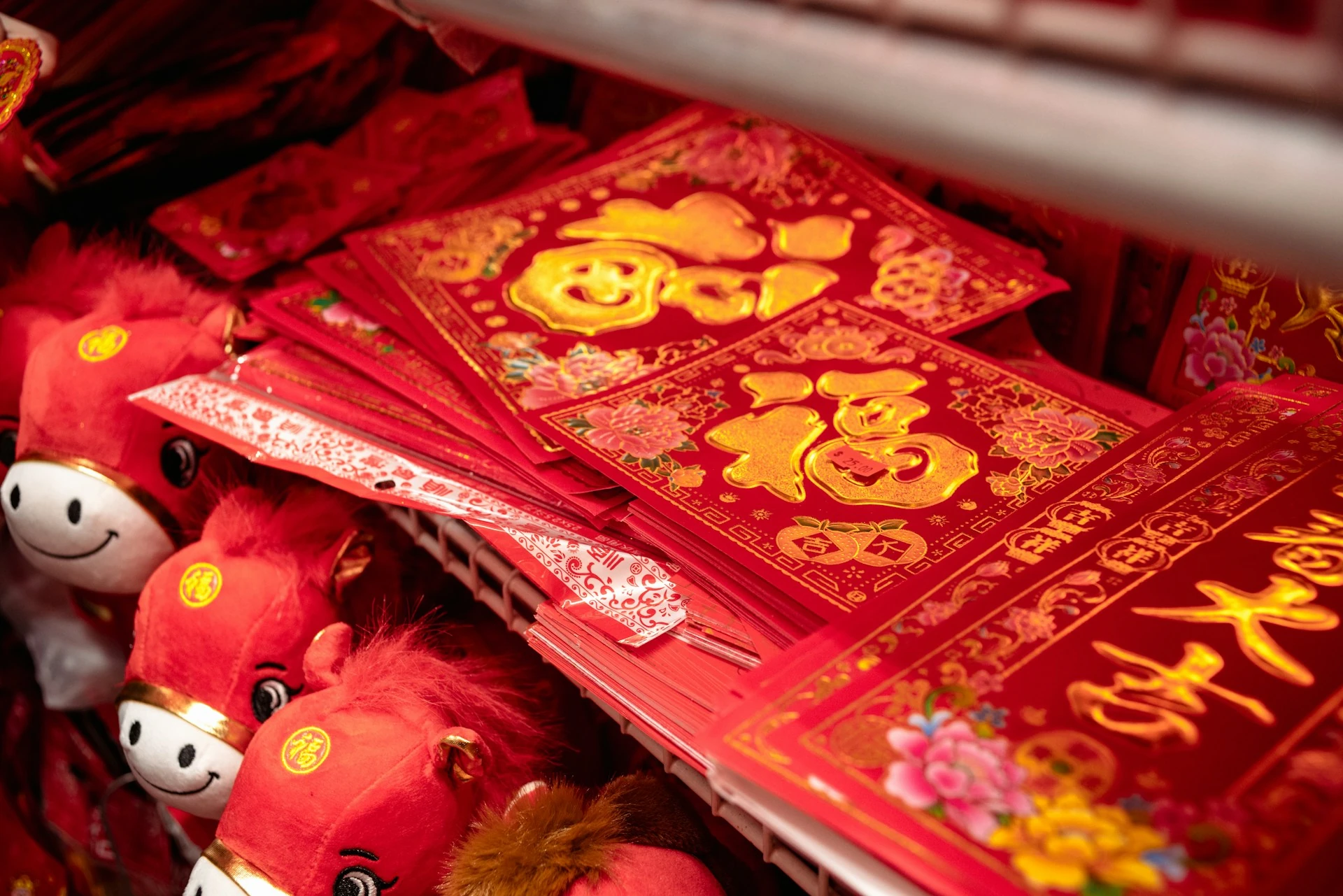
At Lunar New Year and at weddings, the gift is cash in a red envelope, a color tied to good luck. In southern China, married people usually give to the unmarried, mostly children, and bosses give to employees. The amount usually ends in an even digit, since odd sums are associated with funerals, and avoids the number four, which sounds like the word for death. New bills are preferred, and people line up at banks to get them before the holiday. Out of courtesy, you don't open the envelope in front of the person who gave it.
What it teaches: a crisp bill says you planned ahead, without a word.
The extra rupee (India)
Cash gifts at Indian weddings and celebrations often come with one extra rupee: 101, 501, 1,001. A piece from the Indian news agency IANS lays out the usual explanations. Zero reads as an ending and one as a beginning. The extra rupee is always a coin, because metal is associated with Lakshmi, the goddess of wealth. And in the past it was seen as a small, friendly debt, repaid by showing up at the giver's own celebrations.
What it teaches: Mauss in pocket size. A good gift already carries the invitation to the next visit.
Gifts that sound wrong
Clocks, fans and umbrellas (China)
Giving a clock (sòng zhōng) sounds exactly like a phrase meaning to see someone off at the end of their life. That makes wall and desk clocks a gift to avoid, especially for older people. If someone gives one anyway, they can ask for a small coin in return, so the recipient technically buys it. The taboo doesn't cover wristwatches, which are a common gift. Fans and umbrellas are avoided too, because the word sounds like the one for splitting up.
What it teaches: gifts speak a language. If you don't speak the recipient's, ask someone who does.
Gifts that ask for a return
White Day (Japan)
On Valentine's Day in Japan, women give chocolate to men: honmei-choco for someone they love and giri-choco, obligation chocolate, for coworkers and acquaintances. In 1978, the national confectionery industry association created White Day, March 14, as the answer day. There's even a phrase for the expected size of the answer: sanbai kaeshi, triple the return, meaning a return gift worth two to three times what you got.
What it teaches: nearly every culture expects reciprocity. Japan just put it on the calendar.
Omiyage (Japan)
Travelers bring back omiyage for family, friends and coworkers. It's never a souvenir for yourself. It's usually a sweet or snack from the region you visited, sold already split into small portions for handing out. Bringing it to the office is a social obligation, and can work as a kind of apology for having been away. Airports and big train stations are full of shops selling it.
What it teaches: sometimes the gift is for the people who covered for you. If you're stuck on a gift for a coworker, omiyage gives you the template: small, for everyone, from somewhere you went.
When the ritual is the gift
Tió de Nadal (Catalonia)
Starting December 8, Catalan children feed a wooden log a little every night and tuck it under a blanket so it stays warm. On Christmas Day, or Christmas Eve in some homes, they hit it with sticks while singing, and someone reaches under the blanket for what the log has left: candy, nuts, turrón, small toys. Big presents come later, from the Three Kings. And what comes out of the tió belongs to everyone in the room, not to one child.
What it teaches: weeks of buildup and a slightly absurd ritual can matter more than the size of the box.
The surprise and the poem (Netherlands)
On the evening of December 5, pakjesavond, the Dutch exchange gifts in Sinterklaas's name. Presents often arrive disguised in funny, personal packaging called a surprise. They usually come with a poem for the recipient, typically humorous, gently roasting a bad habit everyone knows about. Once the kids are older, many families switch to drawing names, much like Secret Santa.
What it teaches: the words that come with a gift can be the part people remember. If you freeze up, there are prompts in what to write in a Christmas card.
Three Kings and La Befana (January 6)
In Spain, children polish their shoes on the eve of January 6 and wake up to presents beside them, or to coal, which is actually black sugar candy. In Argentina, Paraguay and Uruguay, shoes go by the door with grass and water for the camels. In Puerto Rico, the grass goes in a box under the bed. In Italy, the visitor on the night of January 5 is La Befana, an old woman who, as the legend goes, missed her chance to bring a gift to the infant Jesus with the Magi.
What it teaches: the season doesn't have to end on December 25. A gift with its own date becomes its own event.
Candy for strangers
Saints Cosmas and Damian (Brazil)
The Catholic Church marks the twin saints on September 26, but in Brazil candy goes out to children on the 27th. According to the Brazilian newspaper O Liberal, the custom comes from Candomblé and Umbanda, as an offering to the Erês, or Ibejis, the child deities. A practitioner quoted by the paper describes the link to the Catholic saints as a syncretism that let enslaved Africans keep their traditions. And some people hand out bags of sweets to keep a promise.
What it teaches: a gift can go to someone you've never met and still be deeply personal for the person giving it.
And one tradition more famous than the habit
Jólabókaflóð (Iceland)
The Christmas book flood. Every year a catalogue of new titles, Bókatíðindi, goes free to every household in Iceland, and books are the country's most popular Christmas Eve gift. It officially started in 1944, when the first catalogue came out. Iceland had money to spend and little to buy: importing gifts had become hard, and paper faced fewer restrictions than most things.
Abroad it's sold as families reading late into the night with hot chocolate. Some critics call that a romanticized picture of what is, underneath, peak season for publishers and bookstores.
What it teaches: both can be true. A tradition can start in retail and still leave a good idea behind: the best gift is sometimes one that asks for the recipient's time.
| Where | Avoid | Go with |
|---|---|---|
| China | Wall clocks, umbrellas, amounts with a 4 | Red envelope, new bills, even amount |
| Russia | An even number of flowers | An odd number |
| India | A round cash amount | An amount ending in 1, with a coin |
| Japan | Coming back from a trip with nothing for the office | A regional sweet in small portions |
| Netherlands | A gift with no note | Disguised wrapping and a teasing poem |
Almost none of these customs are about what the gift costs. Almost all of them are about how it will land.
Before you wrap the next one
If you like seeing how other cultures name what we feel, keep going with untranslatable words for love and pet names around the world.
And the Dutch lesson, the words that travel with the gift, works for any date. It can be a note tucked in the box, something homemade, or an Eternal Gift page built online with photos, a letter, a song and stickers, delivered by link or by a QR code you can print and hide inside the wrapping, surprise-style.
Sources
- Sophia Coudenhove, The Moscow Times, 1995: Giving Flowers? Beware of Some Thorny Issues
- Alexander Korolev, Russia Beyond, 2016: 10 common Russian superstitions
- Wikipedia, The Gift (essay), on Marcel Mauss's 1925 essay)
- Wikipedia, Red envelope
- IANS, via The Sentinel (Assam), 2024: 7 reasons why Indians add one rupee in money gifting
- Wikipedia, Faux pas derived from Chinese pronunciation (clocks, fans, umbrellas)
- Wikipedia, White Day
- Wikipedia, Omiyage
- Wikipedia, Tió de Nadal
- Wikipedia, Sinterklaas
- Wikipedia, Epiphany (holiday): Three Kings' Day and La Befana by country)
- Ayla Ferreira and Bruna Lima, O Liberal (Brazil), 2025: the Cosmas and Damian candy tradition and religious syncretism (in Portuguese)
- Wikipedia, Jólabókaflóð